|
| Jeffersonville Presbyterian Cemetery, Jeffersonville, PA |
This past summer at the Jeffersonville Presbyterian Cemetery, just north of Norristown, Pennsylvania, I happened on a zinc tombstone that had a curious symbol on it. (the one seen above) I did not recognize it and did a little research on the Internet, only to discover that the fraternal organization it represented and the man that had created it had quite a fascinating history.
The Brotherhood of the Union was started in 1849 in Philadelphia by writer George Lippard (some sources say 1847). Lippard was a unique combination of a Christian and a socialist and a novelist who lectured about morality by writing salacious tales of the immoral capitalists of Philadelphia. He was born in Blair County, Pennsylvania, in 1822 on the family farm. After his father moved the family to Philadelphia, Lippard studied first for the ministry and then for the law, but became bored with that. He instead became a journalist for a Philadelphia newspaper, covering crime in the city. He was married in 1847 and had two children, but by 1851, both children had died and his wife had succumbed to tuberculosis. Lippard himself would die from the disease in 1854, at the age of only 32.
But before that happened, he accomplished quite a bit. In the 1840’s, Lippard began writing Gothic novels that sex and violence with patriotic and moral lessons. His most famous book, The Quaker City, loosely followed the true-life story of Singleton Mercer, a New Jersey man, who, in 1843, murdered Mahlon Hutchinson Heberton, a man accused of seducing or raping Mercer’s 16-year-old sister (it was never determined exactly what happened to the young woman). Mercer’s lawyer entered a plea of insanity for his client, a defense that had become quite popular at this time, and the jury found him not guilty, perhaps judging and punishing the victim for his seduction/rape crime instead. The Quaker City and Lippard’s other novels were wildly popular at time with the working-class public, but not the critics. (And that continues with today’s critics---his writing is sensationalistic and melodramatic….reminds me of a trashy love-story dime-store novel with heaving bosoms and all that). He was good friends with Edgar Allen Poe, and supposedly supported Poe financially through some of Poe’s worst times. (Ironically, very few people today have ever heard of Lippard or his writings, and yet, most of us can “quoth the Raven, ‘Nevermore.’”)
Lippard’s writing contained many “reworkings” of history, including his tale about the Liberty Bell receiving its crack by ringing for freedom on July 4, 1776 when the Declaration of Independence was read to the Philadelphia public. While that story stirs the patriotic heart, it is not true. During the Revolutionary War, the Liberty Bell was just a Philadelphia church bell that was moved from the city as the British were invading, to keep it out of British hands so they would not melt it down for ammunition. The crack happened somewhere north of Philadelphia en route to the Lehigh Valley…a metal bell, riding in a speeding wagon sans shock absorbers on a rutted dirt road, didn’t have much of a chance of arriving in one piece. Lippard took poetic license with many of the stories of the birth of America, as he was enamored with the Revolution and its heroes, particularly George Washington.
The creation of the Order of the Brotherhood of the Union combined ideas that had preoccupied Lippard in the 1840’s: the secret and symbolic rituals of orders such as the Illuminati and the Freemasons, patriotism without the xenophobia of the Nativists, religious tolerance regardless of individual beliefs, and the reform of capitalism.
Lippard organized the B of U under the motto of “Truth, Hope and Love.” He also believed that the teachings of Jesus Christ and the Declaration of Independence contained “the grand truths,” and the Brotherhood sought to “affirm the right of every man to life, liberty, land and home.” Lippard believed in the same benefits for women and organized a female auxiliary was called the Home Communion. He paid homage to his hero, Washington, by calling the leader of the B of U “The Supreme Washington,” a title that Lippard held himself in his own B of U Circle in Philadelphia.
This next quote of Lippard’s appeared in The White Banner, his journal written for the Brotherhood. It reminds me to some degree of the Occupy Wall Street movement that happened a few months ago. Lippard intended that the B of U “will give to every man the fruits of his labor, will secure to every worker a homestead, will protect the [workers] against the usurpers of capital who degrade labor in the factories and swindle it in the banks, will be means of peaceful combination to reform public opinion so that legislators will no longer dare to make special laws, and bestow privileges upon one man at the expense of ninety-nine of his brothers and sisters.”
By 1850, the Brotherhood numbered 25,000 members in twenty states, and had some similarities with other orders of the 19th century, in that it provided financial aid to its members in times of sickness and death. But the B of U went further than being just a secret fraternal society; even after Lippard’s premature death, his friends continued the radical socialist direction of the organization, and moved its influence into the fledgling labor movement that had sprung up in reaction to the Industrial Revolution in the 1840’s.
One of the most powerful 19th century labor unions, The Knights of Labor, took their inspiration from Brotherhood of the Union in 1869, when a Philadelphia tailor named Uriah Stevens called a meeting that sparked the beginning of the first truly influential labor union in the country. Stevens admired the tenets of the B of U, and the Knights began with a similar philosophy. The Brotherhood of the Union also influenced other labor organizations, including the National Typographical Union. Lippard himself had helped form a cooperative of tailoresses in Philadelphia in 1850.
The Brotherhood of the Union was considered one of the top four politically active and influential fraternities in the late 19th century and into the early 20th century. (The other three organizations were the OUAM and its successor, the Jr. OUAM, and the Patriotic Order of Sons of America.) But after WWII, the B of U lost its radical edge and was renamed the Brotherhood of America, becoming simply a social and mutual aid society, dissolving in 1995.
It is amazing to me that I had never heard of either George Lippard or the Brotherhood of the Union before my journey into the Jeffersonville Cemetery. I found Lippard’s grave (well, his second grave…he was reinterred from a center-city Philadelphia cemetery to an Odd Fellow’s cemetery, Lawnview, in Rockledge, PA). The large monument boasts the many symbols of the Brotherhood of the Union, including the Ark of the Covenant, the Bible, an urn of oil with an eternal flame, and a circle around the earth with a cross on top, symbolizing Lippard’s most fervent belief that a circle was the only way to equalize society, to allow all people to be on an even plane, under God. In fact, all of his chapters of the B of U were called “Circles.” George Lippard created a Masonic Order for the working man---and working woman---in an age when industrialization and capitalism in America were in their infancy. I don’t think he would be happy with the “State of the Union” today, though he might be proud that his pen helped to change labor laws and improve working conditions to some extent for the workers over the past 175 years. I found this story quite fascinating, and this is only a small slice of what I could have written about this subject. Hope you enjoyed it, too.
 |
| Brotherhood of the Union Memorial, Odd Fellows Cemetery, Philadelphia, PA |
 |
| Lippard's Monument, Lawnview Cemetery, Rockledge, PA |
 |
| Lippard's Monument, Lawnview Cemetery, Rockledge, PA |
 |
| Brotherhood of the Union Memorial, Odd Fellows Cemetery, Philadelphia, PA |
 |
| Brotherhood of the Union Memorial, Odd Fellows Cemetery, Philadelphia, PA |
 |
| Brotherhood of the Union Memorial, Odd Fellows Cemetery, Philadelphia, PA |
 |
| Brotherhood of the Union Memorial, Odd Fellows Cemetery, Philadelphia, PA |
 |
| Brotherhood of the Union Memorial, Odd Fellows Cemetery, Philadelphia, PA |
 |
| Brotherhood of the Union Memorial, Odd Fellows Cemetery, Philadelphia, PA |
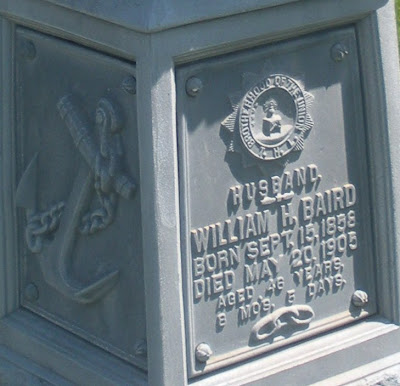 |
| Jeffersonville Presbyterian Cemetery, Jeffersonville, PA |